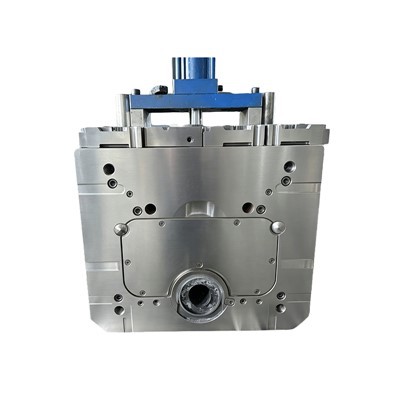
Die casting primarily uses non-ferrous alloys; ferrous metals (steel, iron, etc.) are rarely used due to limitations in mold materials. Among non-ferrous alloy die castings, aluminum alloys are the most widely used, followed by zinc alloys.
(1) Classification of Die-cast Non-ferrous Alloys Restricted Shrinkage Mixed Shrinkage Free Shrinkage Lead Alloy -----0.2-0.3% 0.3-0.4% 0.4-0.5% Low Melting Point Alloy Tin Alloy Zinc Alloy--------0.3-0.4% 0.4-0.6% 0.6-0.8% Aluminum-Silicon System--0.3-0.5% 0.5-0.7% 0.7-0.9% Die-cast Non-ferrous Alloys Aluminum Alloy Aluminum-Copper System Aluminum-Magnesium System---0.5-0.7% 0.7-0.9% 0.9-1.1% High Melting Point Alloy Aluminum-Zinc System Magnesium Alloy----------0.5-0.7% 0.7-0.9% 0.9-1.1% Copper Alloy
(2) Recommended Casting Temperatures for Various Die-cast Alloys Alloy Type Average Wall Thickness of Casting ≤3mm The average wall thickness of the casting is >3mm. The structure is simple. The structure is complex. The structure is simple. The structure is complex.