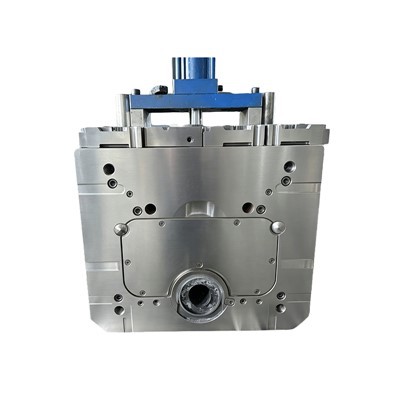
1. Larger integrated die-casting molds: Traditional die-casting molds produce products smaller than 1 meter, while integrated die-casting products reach 1.6-2 meters, requiring molds larger than 3 meters. This increases processing difficulty, and integrated die-casting molds can weigh over 150 tons.
2. Ultra-vacuum die-casting environment: Integrated die-casting demands high mold sealing, requiring a vacuum environment below 30 MPa. Due to the large number of components, the requirements for sealing rings are also high.
3. Longer development cycle and higher development costs: The development cycle for ultra-large die-casting molds is 150-180 days. The cost of traditional die-casting molds is less than 4 million RMB, while the cost of ultra-large die-casting molds is generally over 10 million RMB.
4. High degree of customization: Orders are generally placed through custom orders, resulting in low design reuse. Typically, a second mold needs to be developed entirely from scratch.
5. High material performance requirements: Due to the faster injection speed of large die-casting machines, the molds need to withstand greater pressure. In addition, there are high requirements for the tempering performance, toughness, and coefficient of thermal expansion of the materials, as well as surface treatment technology, which are all challenging aspects.