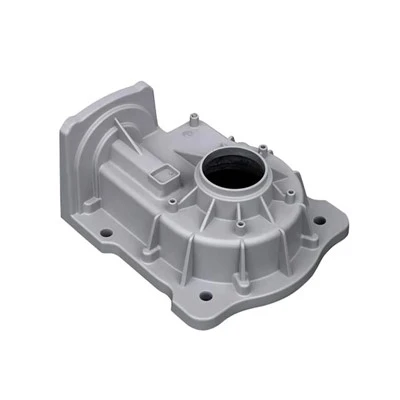
Aluminum alloy die castings are widely used in motor manufacturing due to their excellent thermal conductivity, lightweight, and good machinability, making them an ideal material. However, during production, aluminum alloy die castings often require aging treatment to improve their mechanical properties.
Aging treatment refers to a heat treatment process that involves holding the aluminum alloy at a certain temperature for a period of time, causing strengthening phases to precipitate within the material, thereby increasing its strength and hardness. Aging treatment is generally divided into natural aging and artificial aging. Natural aging occurs at room temperature and is a slow process, while artificial aging requires a heating furnace, is faster, and has a more significant effect.
During the aging process, the internal crystal structure of the aluminum alloy undergoes microscopic changes. These changes mainly manifest as the diffusion of solute atoms in the solid solution and the formation of strengthening phases. These microscopic changes cause slight adjustments in the material's volume, resulting in dimensional changes. Normally, these dimensional changes are small, but they still require attention in the manufacture of high-precision parts.
Specifically, after artificial aging, aluminum alloy die castings for motors generally exhibit slight shrinkage. Shrinkage is closely related to alloy composition, casting process, aging temperature, and aging time. For example, higher temperatures or longer aging times result in more precipitated strengthening phases and potentially greater shrinkage; conversely, lower temperatures or shorter aging times lead to less shrinkage. For critical mating dimensions, finishing is typically required after aging treatment to ensure the accuracy of the final assembly.