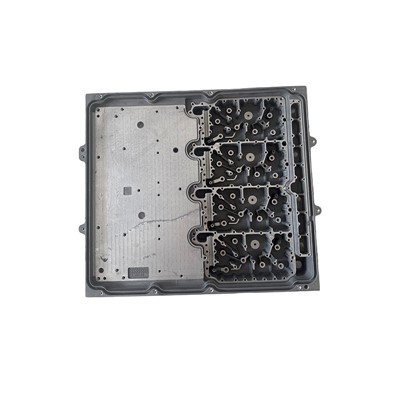

In the realm of aluminum die casting tooling, temperature control stands as a cornerstone of success. As a seasoned Aluminum Die Casting Tooling supplier, I've witnessed firsthand the profound impact that precise temperature management can have on the quality, efficiency, and overall success of the die casting process. In this blog post, I'll delve into the importance of die casting temperature control in aluminum die casting tooling, exploring its effects on various aspects of the production process and highlighting why it's a critical consideration for any manufacturer.
The Fundamentals of Die Casting Temperature Control
Before we dive into the importance of temperature control, let's first understand the basics of die casting. Die casting is a manufacturing process in which molten metal is injected into a mold cavity under high pressure. The molten metal then solidifies, taking the shape of the mold cavity and forming a part. In aluminum die casting, the molten aluminum is typically heated to a temperature between 650°C and 700°C before being injected into the mold.
Temperature control in die casting refers to the management of the temperature of the molten metal, the mold, and the surrounding environment. This involves maintaining a consistent temperature throughout the casting process to ensure that the molten metal fills the mold cavity evenly and solidifies properly. Temperature control is achieved through a combination of heating and cooling systems, which are designed to regulate the temperature of the molten metal and the mold.
The Importance of Temperature Control in Aluminum Die Casting Tooling
Quality of the Casting
One of the primary reasons why temperature control is so important in aluminum die casting tooling is its impact on the quality of the casting. When the temperature of the molten metal is too high, it can cause a variety of defects in the casting, such as porosity, shrinkage, and hot tears. Porosity occurs when gas bubbles are trapped in the casting during solidification, while shrinkage occurs when the metal contracts as it cools. Hot tears are cracks that form in the casting due to thermal stress.
On the other hand, if the temperature of the molten metal is too low, it may not flow properly into the mold cavity, resulting in incomplete filling and a poor-quality casting. Additionally, a low temperature can cause the metal to solidify too quickly, leading to a lack of fusion between the metal and the mold, which can result in surface defects and poor dimensional accuracy.
By maintaining a consistent temperature throughout the casting process, temperature control helps to ensure that the molten metal fills the mold cavity evenly and solidifies properly, resulting in a high-quality casting with minimal defects.
Tool Life
Another important aspect of temperature control in aluminum die casting tooling is its impact on the life of the tool. The high temperatures and pressures involved in the die casting process can cause significant wear and tear on the tool, leading to premature tool failure. Temperature control helps to reduce the thermal stress on the tool, which can extend its life and reduce the need for frequent tool replacements.
When the temperature of the mold is too high, it can cause the tool steel to soften and lose its hardness, which can lead to increased wear and tear on the tool. Additionally, high temperatures can cause the mold to expand, which can result in dimensional changes and a loss of accuracy. By maintaining a consistent temperature, temperature control helps to prevent these issues and ensure that the tool remains in good condition for a longer period of time.
Production Efficiency
Temperature control also plays a crucial role in the production efficiency of aluminum die casting tooling. By maintaining a consistent temperature, temperature control helps to reduce the cycle time of the casting process, which can increase the production rate and reduce the cost per part.
When the temperature of the molten metal is too high, it can take longer for the metal to solidify, which can increase the cycle time of the casting process. Additionally, high temperatures can cause the mold to heat up, which can require additional cooling time before the next casting can be made. By maintaining a consistent temperature, temperature control helps to reduce the cycle time and increase the production rate.
Energy Efficiency
In addition to its impact on quality, tool life, and production efficiency, temperature control also has a significant impact on energy efficiency. By maintaining a consistent temperature, temperature control helps to reduce the energy consumption of the die casting process, which can lower the operating costs and reduce the environmental impact.
When the temperature of the molten metal is too high, it requires more energy to heat the metal and maintain its temperature. Additionally, high temperatures can cause the mold to heat up, which can require additional cooling energy to maintain the temperature of the mold. By maintaining a consistent temperature, temperature control helps to reduce the energy consumption of the die casting process and lower the operating costs.
Temperature Control Strategies in Aluminum Die Casting Tooling
There are several strategies that can be used to control the temperature in aluminum die casting tooling. These strategies include:
- Preheating the Mold: Preheating the mold before the casting process helps to ensure that the molten metal fills the mold cavity evenly and solidifies properly. Preheating also helps to reduce the thermal stress on the mold, which can extend its life.
- Cooling the Mold: Cooling the mold during the casting process helps to maintain a consistent temperature and prevent the mold from overheating. Cooling can be achieved through a variety of methods, such as water cooling, air cooling, or a combination of both.
- Controlling the Temperature of the Molten Metal: Controlling the temperature of the molten metal is essential for ensuring that the metal fills the mold cavity evenly and solidifies properly. This can be achieved through a variety of methods, such as using a temperature sensor to monitor the temperature of the molten metal and adjusting the heating or cooling system accordingly.
- Using Insulation: Using insulation on the mold and the surrounding environment helps to reduce the heat loss and maintain a consistent temperature. Insulation can be made from a variety of materials, such as ceramic fiber, fiberglass, or refractory materials.
Conclusion
In conclusion, temperature control is a critical aspect of aluminum die casting tooling. By maintaining a consistent temperature throughout the casting process, temperature control helps to ensure the quality of the casting, extend the life of the tool, increase the production efficiency, and reduce the energy consumption. As a Aluminum Die Casting Tooling supplier, we understand the importance of temperature control and offer a range of solutions to help our customers achieve optimal temperature control in their die casting processes.
If you're interested in learning more about our Aluminum Die Casting Tooling products and services, or if you have any questions about temperature control in aluminum die casting, please don't hesitate to contact us. We'd be happy to discuss your specific needs and provide you with a customized solution.
References
- Campbell, J. (2003). Casting. Butterworth-Heinemann.
- Flemings, M. C. (1974). Solidification Processing. McGraw-Hill.
- Kalpakjian, S., & Schmid, S. R. (2010). Manufacturing Engineering and Technology. Pearson.