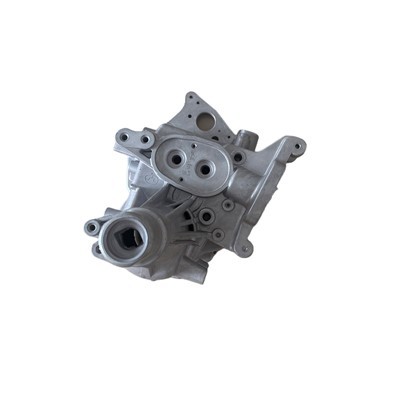

Hey there! As a supplier of Power Tools Die Casting Mold, I know how crucial it is to ensure the precision of these molds. Precision isn't just a nicety; it's the backbone of producing high - quality power tools. So, let's dive into how we can make sure our die - casting molds are as precise as possible.


1. Material Selection
The first step in ensuring precision is choosing the right materials. You can't expect a top - notch, precise mold if you're using sub - standard materials. High - quality tool steel is usually the way to go for power tools die - casting molds. It has excellent heat resistance, wear resistance, and toughness.
For example, H13 tool steel is a popular choice. It can withstand the high temperatures and pressures involved in the die - casting process without deforming easily. When the mold material doesn't deform, it maintains its shape, which directly contributes to the precision of the final product. We always make sure to source our materials from reliable suppliers. This way, we can be confident in the quality and performance of the materials, which in turn helps in achieving the precision we need.
2. Advanced Design and Engineering
A well - designed mold is half the battle won. We use the latest computer - aided design (CAD) software to create detailed and accurate 3D models of the molds. This allows us to visualize every aspect of the mold, from the cavity shape to the cooling channels.
During the design phase, we pay close attention to factors like draft angles, wall thickness, and gate locations. Draft angles are essential for easy ejection of the cast parts. If the draft angles are incorrect, the parts might get stuck in the mold, leading to damage and loss of precision. Wall thickness also plays a crucial role. Uneven wall thickness can cause shrinkage and warping in the cast parts, affecting their overall precision.
As for gate locations, they determine how the molten metal flows into the mold cavity. A well - placed gate ensures a smooth and even flow of metal, reducing the chances of defects and improving precision. We also perform simulation tests using computer - aided engineering (CAE) software. These simulations help us predict how the molten metal will behave during the casting process, allowing us to make any necessary adjustments to the design before actually manufacturing the mold.
3. High - Precision Manufacturing Processes
Once the design is finalized, it's time to move on to manufacturing. We use state - of - the - art machining equipment like CNC (Computer Numerical Control) milling machines and EDM (Electrical Discharge Machining). CNC milling machines can accurately cut and shape the mold components according to the design specifications. They offer a high level of repeatability, ensuring that each mold is made to the same high - precision standards.
EDM, on the other hand, is great for creating complex shapes and fine details in the mold. It uses electrical discharges to remove material, allowing us to achieve very tight tolerances. During the manufacturing process, we also conduct regular quality inspections. We use precision measuring tools like coordinate measuring machines (CMMs) to check the dimensions of the mold components. Any deviations from the design specifications are immediately corrected, ensuring that the final mold is as precise as possible.
4. Proper Heat Treatment
Heat treatment is a critical step in the production of power tools die - casting molds. It helps to improve the hardness, strength, and wear resistance of the mold. After the machining process, the mold components undergo a series of heat - treatment processes, such as quenching and tempering.
Quenching involves heating the mold to a high temperature and then rapidly cooling it. This process hardens the material, making it more resistant to wear and deformation. Tempering, on the other hand, is done after quenching to reduce the brittleness of the material and improve its toughness. By carefully controlling the heat - treatment process, we can ensure that the mold has the right balance of hardness and toughness, which is essential for maintaining precision during the die - casting process.
5. Quality Control and Testing
Quality control doesn't end with manufacturing. We have a comprehensive quality - control system in place to ensure that the finished molds meet the highest standards of precision. Before shipping the molds to our customers, we conduct a series of tests.
One of the most important tests is the trial casting. We use the mold to produce a small batch of cast parts and then carefully inspect these parts for any defects. We check for things like dimensional accuracy, surface finish, and the presence of any internal defects. If any issues are found, we go back and make the necessary adjustments to the mold.
We also perform regular maintenance on our testing equipment to ensure its accuracy. This way, we can be confident in the results of our tests and provide our customers with molds that are truly precise.
6. Continuous Improvement
The world of die - casting is constantly evolving, and we're committed to staying at the forefront. We invest in research and development to find new and better ways to improve the precision of our power tools die - casting molds.
We also listen to our customers' feedback. They're the ones using the molds in their production processes, so they have valuable insights into what works and what doesn't. By incorporating their feedback, we can make continuous improvements to our molds and our manufacturing processes.
Other Related Die - Casting Molds
If you're also interested in other types of die - casting molds, we've got you covered. Check out our Home Appliance Die Casting Mold, Automotive Die Casting Mold, and Lighting Die Casting Mold. These molds also adhere to high - precision standards and are designed to meet the specific requirements of different industries.
Let's Talk Business
If you're in the market for high - precision power tools die - casting molds, don't hesitate to reach out. We're here to provide you with the best solutions for your casting needs. Whether you're a small - scale manufacturer or a large - scale enterprise, we can work with you to ensure that you get the molds that meet your exact specifications.
References
- Die Casting Engineering Handbook, by Henry T. Savage
- Die Casting: Science and Technology, by David Apelian, Iver E. Anderson, and Daniel J. Lloyd