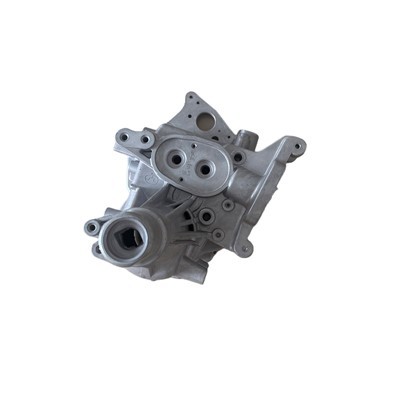

Ensuring the accuracy of aluminum die casting tooling is crucial for any supplier in the industry. As a supplier of Aluminum Die Casting Tooling, I understand the significance of precision in this process. In this blog, I will share some key strategies and best practices that we follow to guarantee the high - accuracy of our aluminum die casting tooling.
1. Design Phase
The design phase is the foundation for accurate aluminum die casting tooling. Our team of experienced designers starts by collaborating closely with the clients. We need to understand their specific requirements, including the shape, size, and functionality of the final product. This involves in - depth discussions and the review of detailed product specifications.
We use advanced 3D modeling software to create a virtual model of the die casting tooling. This allows us to visualize the entire process and identify potential issues before the actual production begins. For example, we can analyze the flow of molten aluminum within the mold, ensuring that it fills all the cavities evenly. By simulating the casting process, we can make adjustments to the design to prevent defects such as porosity, shrinkage, and cold shuts.
Moreover, we pay special attention to the tolerances specified in the design. Tight tolerances are often required for applications like 3C Electronics Die Casting Mold and Medical Device Die Casting Mold. Our designers use industry - standard tolerance charts and take into account the thermal expansion and contraction of the materials during the casting process. This helps us to design a tooling that can produce parts within the required precision.
2. Material Selection
The choice of materials for the die casting tooling has a significant impact on its accuracy. We carefully select high - quality tool steel that has excellent heat resistance, wear resistance, and dimensional stability. The material should be able to withstand the high pressures and temperatures involved in the aluminum die casting process without deforming or wearing out quickly.
We source our materials from reliable suppliers and conduct strict quality control checks. Each batch of material is tested for its chemical composition and mechanical properties. This ensures that the material meets our standards and can be used to produce accurate die casting tooling. For instance, we use materials with low thermal expansion coefficients to minimize the dimensional changes during the heating and cooling cycles of the casting process.
3. Manufacturing Process
During the manufacturing process, we employ advanced machining techniques to ensure the accuracy of the die casting tooling. Computer Numerical Control (CNC) machining is our primary method, which offers high precision and repeatability. Our CNC machines are programmed to cut the tooling with extremely tight tolerances, often within a few micrometers.
We also use Electrical Discharge Machining (EDM) for intricate details and hard - to - reach areas. EDM allows us to create complex shapes with high accuracy by using electrical discharges to erode the material. This is particularly useful for Precision Die Casting Mold where fine details are required.
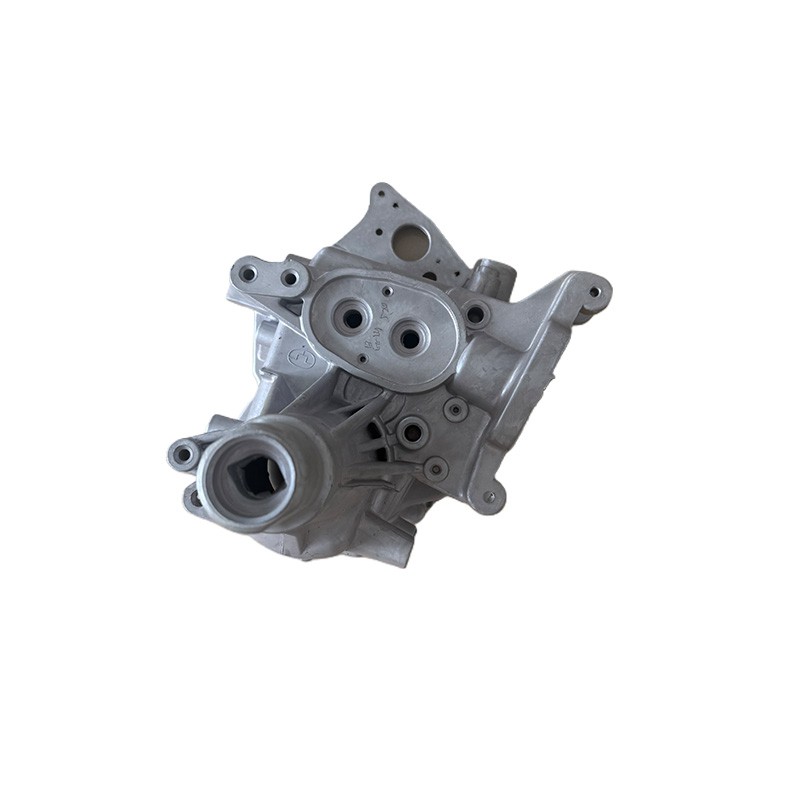
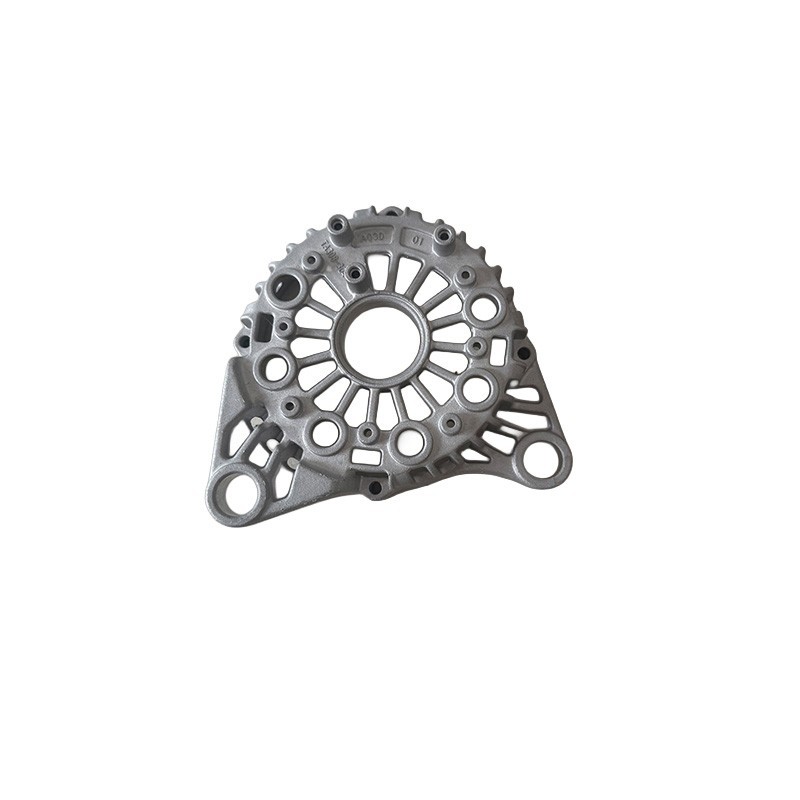
In addition to machining, we perform rigorous quality control at every stage of the manufacturing process. We use coordinate measuring machines (CMM) to measure the dimensions of the tooling and compare them with the design specifications. Any deviations are immediately corrected to ensure that the final product meets the required accuracy.
4. Heat Treatment
Heat treatment is an essential step in the production of aluminum die casting tooling. It helps to improve the hardness, strength, and wear resistance of the tooling. We follow a precise heat treatment process that includes heating the tooling to a specific temperature and then cooling it at a controlled rate.
The heat treatment process is carefully monitored to ensure that the tooling does not warp or distort. We use advanced heat treatment equipment and techniques to achieve the desired properties. For example, we may use quenching and tempering to obtain the right balance between hardness and toughness. This helps the tooling to maintain its accuracy during the repeated casting cycles.
5. Assembly and Testing
Once the individual components of the die casting tooling are manufactured and heat - treated, they are assembled with great care. Our assembly team follows strict procedures to ensure that all the parts fit together perfectly. We use precision measuring tools to check the alignment and clearance between the components.
After assembly, the tooling undergoes a series of tests. We perform trial casts to evaluate the performance of the tooling. During the trial casts, we monitor the filling of the mold, the quality of the cast parts, and the dimensional accuracy. Any issues identified during the testing phase are addressed immediately. We may make adjustments to the tooling, such as modifying the gating system or the cooling channels, to improve its performance and accuracy.
6. Maintenance and Repair
To ensure the long - term accuracy of the aluminum die casting tooling, regular maintenance and repair are necessary. We provide our clients with detailed maintenance guidelines and offer maintenance services. Our maintenance team inspects the tooling regularly for signs of wear, damage, or corrosion.
If any issues are detected, we perform timely repairs. We use high - quality replacement parts and follow the same strict manufacturing and quality control standards as in the original production. This helps to extend the lifespan of the tooling and maintain its accuracy over time.
Conclusion
Ensuring the accuracy of aluminum die casting tooling is a multi - step process that requires attention to detail at every stage. From design and material selection to manufacturing, heat treatment, assembly, testing, and maintenance, each step plays a crucial role in achieving high - precision tooling. As a supplier of Aluminum Die Casting Tooling, we are committed to providing our clients with the highest quality tooling that meets their specific requirements.
If you are in the market for aluminum die casting tooling and are looking for a reliable supplier, we would be more than happy to discuss your needs. Our team of experts can work with you to design and manufacture tooling that offers the accuracy and performance you require. Contact us today to start the conversation and explore how we can assist you in your die casting projects.
References
- Die Casting Handbook, Second Edition by Peter G. Mamalis, Ioannis V. Samarinas, and George E. Marnelis.
- Aluminum Die Casting: Technology, Design, and Applications by Robert A. Gruzleski.
- Manufacturing Engineering and Technology by Serope Kalpakjian and Steven R. Schmid.