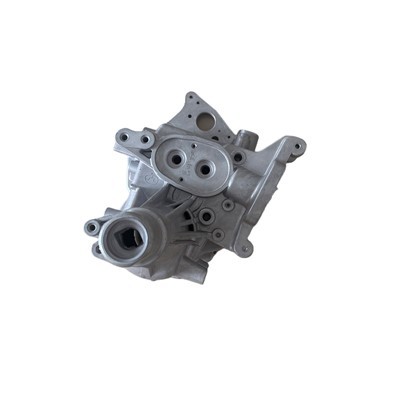

As a supplier of Aluminum Die Casting Tooling, I've seen firsthand how the die casting environment can have a huge impact on the tooling we produce. In this blog post, I'll dive deep into what these influences are and why they matter to anyone in the die casting business.
Temperature and Its Effects
One of the most significant factors in the die casting environment is temperature. When it comes to aluminum die casting, the molten aluminum is typically poured at extremely high temperatures, usually around 650 - 700 degrees Celsius. This high - temperature environment can cause a lot of stress on the tooling.
The constant exposure to high heat can lead to thermal fatigue in the die casting tooling. Thermal fatigue occurs when the tooling expands and contracts repeatedly due to the temperature changes. Over time, this can cause cracks to form on the surface of the tool. These cracks not only reduce the lifespan of the tool but can also affect the quality of the castings. For example, if a crack forms in the tool, it might allow the molten aluminum to seep out, resulting in flash on the casting.
On the other hand, if the temperature in the die casting environment is not properly controlled and is too low, the molten aluminum may not flow smoothly into all the cavities of the tool. This can lead to incomplete castings, where some parts of the product are not fully formed. It's like trying to pour thick honey into a narrow - necked bottle; if the honey is too cold, it won't flow well.
Humidity and Corrosion
Humidity in the die casting environment is another important factor. High humidity levels can lead to corrosion of the aluminum die casting tooling. Aluminum is a reactive metal, and when it comes into contact with moisture in the air, it can start to oxidize. This oxidation process can eat away at the surface of the tooling, making it rough and pitted.
A corroded tooling surface can cause problems during the casting process. For instance, it can make it difficult for the castings to be ejected from the tool. The rough surface creates more friction, which may require more force to remove the castings. This extra force can cause damage to both the castings and the tooling itself.
Moreover, corrosion can also affect the dimensional accuracy of the tooling. As the surface of the tool is corroded, the size and shape of the cavities can change slightly. This means that the castings produced may not meet the required specifications, leading to a higher rate of rejects.


Contamination in the Environment
Contamination in the die casting environment can also have a negative impact on the tooling. There are various types of contaminants that can be present, such as dust, dirt, and metal particles.
Dust and dirt can get into the molten aluminum during the casting process. When this happens, these particles can become embedded in the castings and also damage the tooling. They can scratch the surface of the tool, which reduces its smoothness and can lead to poor - quality castings.
Metal particles from previous castings or from the surrounding equipment can also cause problems. If these particles are not removed properly, they can get stuck in the tooling cavities. This can cause blockages, preventing the molten aluminum from filling the cavities correctly.
Vibration and Mechanical Stress
The die casting process involves a lot of mechanical activity, and vibration is a common occurrence. Vibration in the die casting environment can cause mechanical stress on the tooling. The constant shaking can loosen the components of the tool, leading to misalignments.
If the tooling is not properly aligned, it can result in uneven distribution of the molten aluminum in the cavities. This can lead to castings with inconsistent thickness and quality. For example, in Lighting Die Casting Mold, a misaligned tool can make the lighting parts have different brightness levels due to uneven wall thickness.
In addition, mechanical stress can also cause the tooling to wear out more quickly. The repeated vibrations can cause the joints and connections in the tool to weaken over time. This can lead to parts of the tool breaking off or becoming detached, which requires costly repairs or even replacement of the entire tool.
Impact on Different Types of Die Casting Molds
Let's take a look at how the die casting environment affects different types of molds.
Automotive Die Casting Mold: In the automotive industry, the quality and precision of die cast parts are crucial. The high - volume production in this sector means that the tooling is constantly in use. The temperature fluctuations and mechanical stress in the die casting environment can cause the Automotive Die Casting Mold to wear out faster. Any damage to the tooling can lead to defects in the automotive parts, which can be a safety hazard.
Medical Device Die Casting Mold: Medical devices require extremely high precision and cleanliness. The humidity and contamination in the die casting environment can be a major concern for Medical Device Die Casting Mold. Corrosion and particle contamination can affect the surface finish and dimensional accuracy of the medical parts, which may not meet the strict regulatory requirements.
How to Mitigate the Influence
To reduce the negative influence of the die casting environment on aluminum die casting tooling, there are several measures that can be taken.
First, temperature control is essential. Using advanced temperature management systems can help maintain a stable temperature during the casting process. This can reduce thermal fatigue and ensure that the molten aluminum flows smoothly.
Second, humidity control is also important. Installing dehumidifiers in the die casting area can help keep the humidity levels in check and prevent corrosion.
Third, regular cleaning and maintenance of the tooling are necessary. This includes removing any dust, dirt, and metal particles from the tool to prevent contamination.
Fourth, using vibration - damping materials and proper mounting techniques can reduce the mechanical stress caused by vibration.
Conclusion
The die casting environment has a significant influence on aluminum die casting tooling. Temperature, humidity, contamination, and vibration can all cause problems such as thermal fatigue, corrosion, and mechanical wear. As a supplier of Aluminum Die Casting Tooling, we understand the importance of these factors and work hard to provide high - quality tooling that can withstand the challenges of the die casting environment.
If you're in the market for Aluminum Die Casting Tooling or have any questions about how the environment can affect your tooling, feel free to reach out to us for a detailed discussion. We're here to help you make the best choices for your die casting needs.
References
- Campbell, J. (2003). Casting. Butterworth - Heinemann.
- Flemings, M. C. (1974). Solidification Processing. McGraw - Hill.